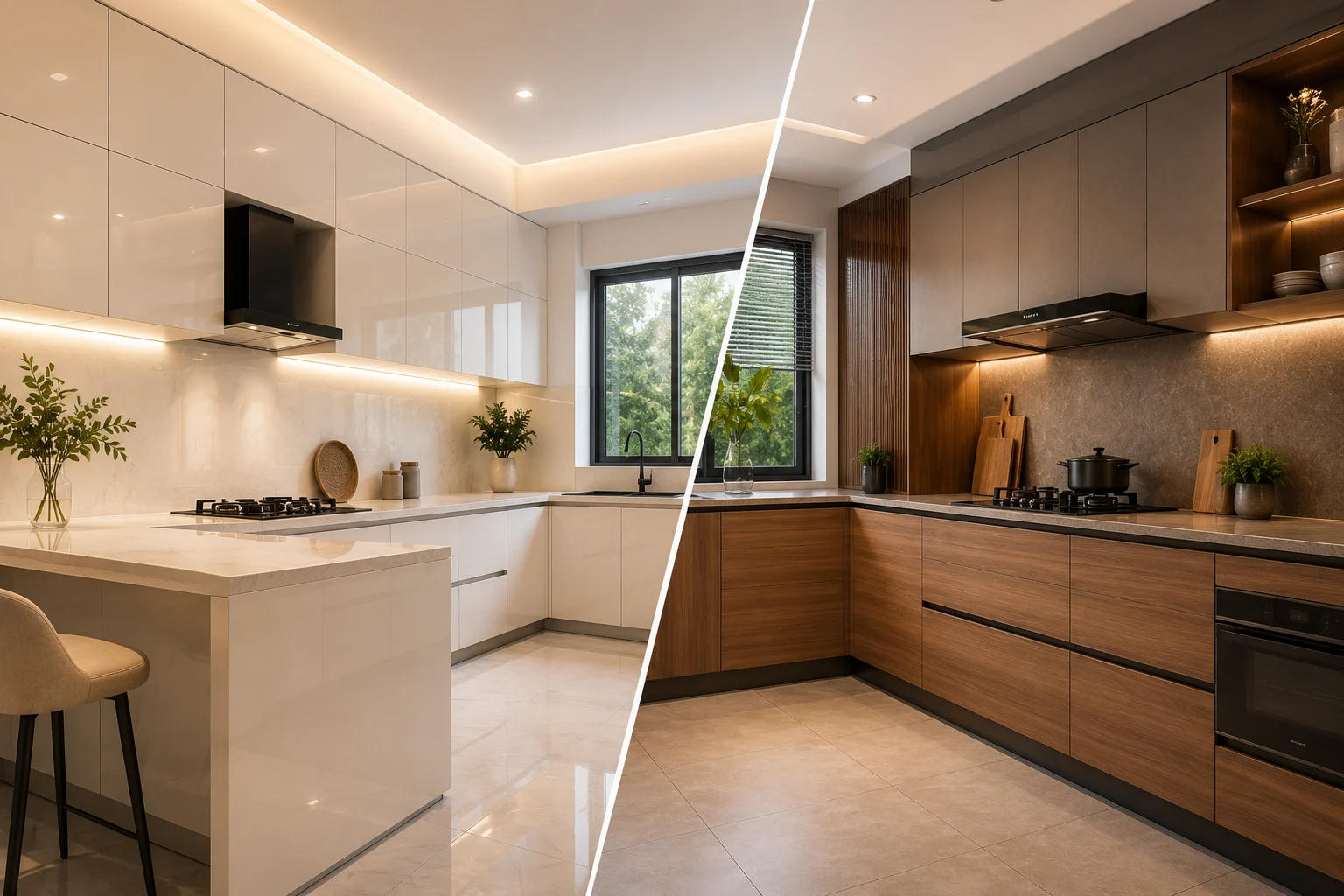
Most homeowners approach kitchen design with a "showroom mindset," focusing on how a slab looks under recessed lighting rather than how it behaves under a hot cast-iron skillet. The kitchen is the most high-friction environment in your home; it is a laboratory of thermal shock, chemical acidity, and physical impact. There is a constant, underlying tension between the aesthetic desire for a pristine, white surface and the functional reality of a spilled bottle of wine or a turmeric-heavy masala. If you choose based on a trend, you are essentially setting a timer on when your kitchen will look aged and damaged. This guide ignores the "style of the month" to focus on the mechanical and chemical properties of surfaces, ensuring your investment holds up to real-world usage.
Things you should know before choosing the perfect kitchen countertops.
Assess Your Cooking Lifestyle and Daily Kitchen Usage
Before you look at a single stone slab, you need to conduct a forensic audit of your kitchen habits. A countertop that works for a weekend baker who needs a cool surface for pastry will fail a household that grinds fresh masalas and moves heavy pressure cookers. If your cooking involves high-pigment ingredients like turmeric or beetroot, porosity is your primary enemy. If you have kids or a household where heavy stainless steel vessels are frequently dropped, you cannot afford a brittle material like Nano-white or soft marble. Be honest about your maintenance tolerance: if the idea of resealing a natural stone every twelve months feels like a chore, you must prioritize "wipe-and-go" engineered materials. High-traffic kitchens demand a surface that forgives mistakes; vanity choices are only for those who rarely use their stove.
Kitchen Countertop Cost
The price per square foot of a stone slab is only about 60% of your actual countertop expenditure. Homeowners often blow their entire budget on a premium material only to find they cannot afford the technical expertise required to install it safely. Hidden costs are found in the details: complex edge profiling, like a mitered joint for a "thick" look, requires precision machinery and significantly higher labor costs. Every cutout for a sink or a built-in hob is a structural weak point that demands specialized reinforcement to prevent the slab from snapping during or after installation.
Types of Kitchen Countertop Materials
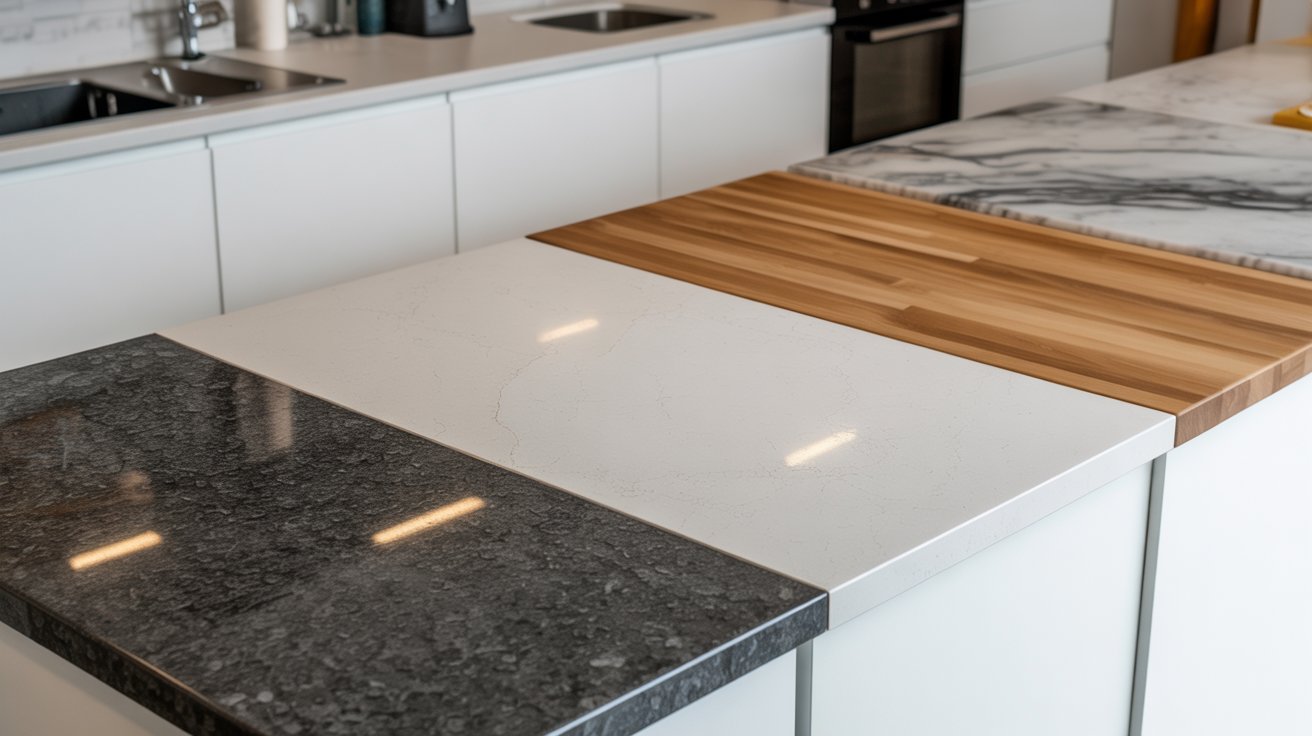
Choosing a material is a trade-off between geological physics and industrial engineering. We categorize these by their structural behavior under stress.
A. Natural Stone: The Purist’s Choice
Natural stone is for those who accept the irregularities of the earth. Granite remains the baseline for durability; its igneous composition handles heat up to 250°C, making it the only surface where you can safely "drop" a hot pan. However, its porous nature requires an annual chemical seal. Marble is the opposite; it is chemically sensitive. While its naturally cool temperature is a technical asset for pastry work, its calcium carbonate base will "etch" (dissolve) upon contact with lemon or vinegar. Soapstone and Travertine offer a niche, matte aesthetic, but they are soft; they will develop a "patina", a polite term for a surface covered in scratches and dings.
B. Engineered Stone: The Practical Choice
Quartz has overtaken the market because it solves the porosity problem. By binding 90% crushed stone with polymer resins, manufacturers create a surface that is literally impossible to stain. It is the most hygienic choice, though it is "heat-allergic" due to the resin binder. Solid Surface (Corian) offers the only "true" seamless joint. You can fuse the countertop to the sink, leaving no gaps for mold. It is repairable, scratches can be sanded out—but it lacks the raw hardness of stone and will melt if exposed to direct flame.
C. The Glass Hybrid (Nano White / G5)
Nano White is a glass-ceramic hybrid. It is arguably the most "clinical" material, pure white, zero porosity, and harder than granite. However, it is structurally brittle. If your cabinet base sags by even a few millimeters, the internal tension will cause the slab to snap. It requires elite-level installation engineering.
D. The Alternatives (Budget & Style Specific)
Butcher Block adds organic warmth and is the only surface you can safely cut on, but it is a biological liability if not oiled monthly to prevent bacterial soak. Concrete provides an industrial, cast-in-place look, but it is guaranteed to develop hairline cracks over time as the house settles. Laminate is the budget fallback. It offers infinite colors but is structurally weak; once the internal particle board gets wet or scorched, the entire unit is trash.
Technical Factors That Affect Kitchen Countertop Durability
The structural integrity of your kitchen often depends on the vertical profile of the stone. A standard 20mm slab is the industrial baseline, but opting for a 30mm thickness provides a significant boost in "tensile strength" and a more substantial, premium feel. If you go thinner, you increase the risk of snapping at the sink cutout.
Polished finishes are the most stain-resistant because the surface is sealed tight, though they reflect every fingerprint. Honed (Matte) surfaces look modern but are more porous and can trap microscopic dirt. Leathered finishes are textured to hide water spots and scratches, making them ideal for high-utility zones. Finally, your Edge Profile is a balance of ergonomics and cost. A simple eased edge is clean and cheap; a Bullnose is safer for households with children, while complex Ogee edges are expensive and notorious for trapping kitchen grease and dust in their grooves.
Choosing the Best Kitchen Countertop for Long-Term Use
The "right" countertop is a technical compromise between your budget, your cooking habits, and your tolerance for maintenance. There is no singular "best" material; there is only the best material for your specific mess and method. If you value raw heat resistance, you choose granite. If you want a clinical, stain-proof environment, you choose quartz. Prioritizing aesthetics over these mechanical realities is a guaranteed way to ensure your kitchen feels aged within months of installation.
Integrating a heavy stone slab into a functioning kitchen is a complex engineering task that involves weight-bearing calculations and precise leveling. A countertop is only as stable as the cabinetry beneath it. For a kitchen design that balances practicality with aesthetic brilliance, consult the experts at Lemon Interior Designers. Our team specializes in creating cohesive living spaces, offering end-to-end solutions from modular furniture to the final finish, ensuring your kitchen works as hard as you do.